The Memory View: Read Your Target's Memory Straight From a Capture

路 10 min read
Ibrahim Kamal
Ibrahim Kamal
CEO @ Ikalogic
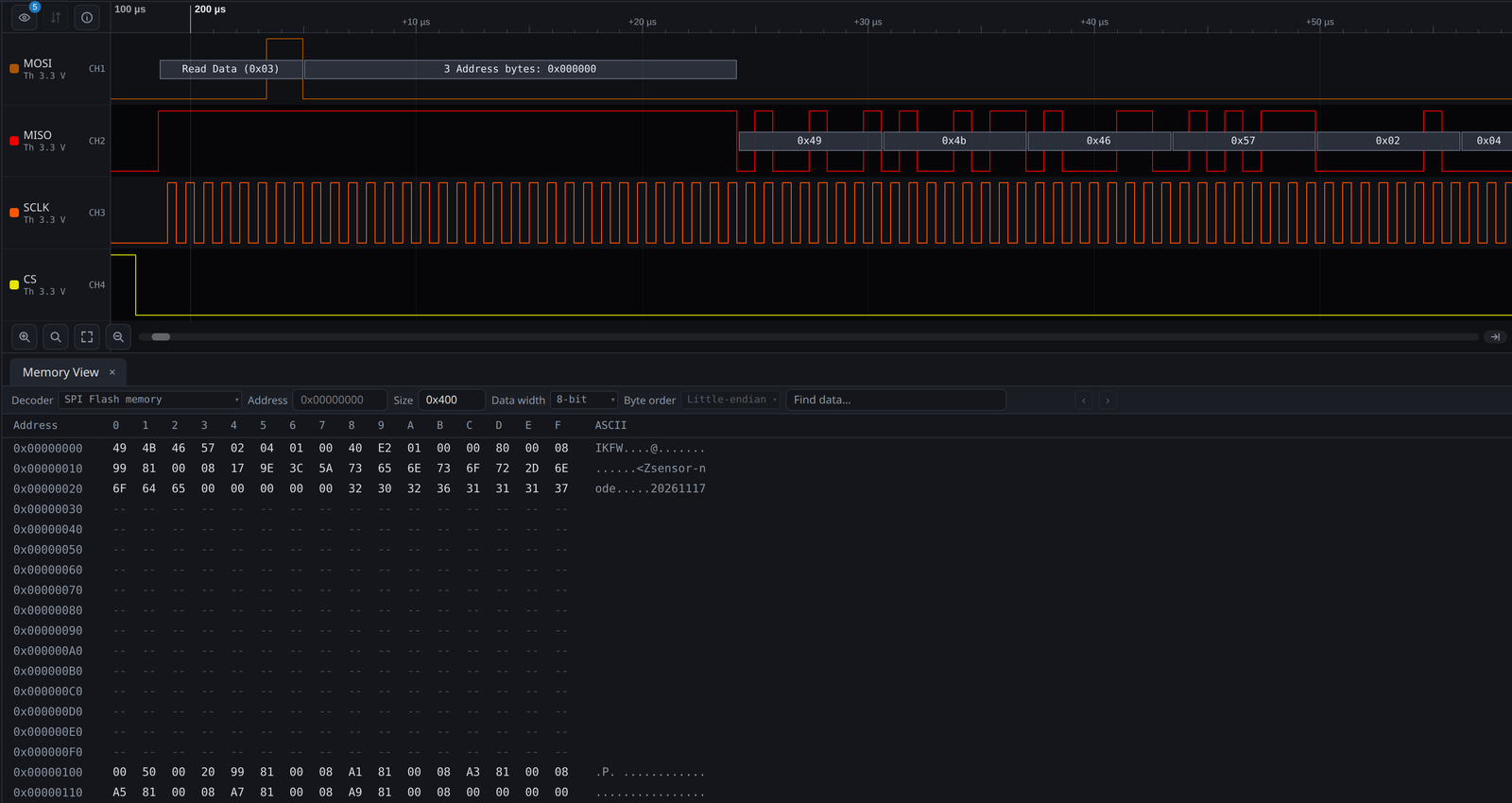
ScanaStudio with an SPI flash capture: the waveform shows a Read Data command at address 0x000000 and the bytes 0x49 0x4b 0x46 0x57 on MISO; the Memory View below shows the same bytes at address 0x00000000, with IKFW and sensor-node readable in the ASCII column.

When a microcontroller boots from an SPI flash, the capture holds everything it read: the image header, the vector table, the settings. The decoder lists those bytes in time order, frame by frame. What you usually want to know is what sits at address 0x100.

The Memory View answers that. A decoder places each byte it decodes at the address it was read from or written to on the target, and ScanaStudio shows the result as a memory dump, with the target's addresses down the side.
Protocol Triggers From Code: Arm an SP259 on an I2C Address or a UART Byte

路 6 min read
Ibrahim Kamal
Ibrahim Kamal
CEO @ Ikalogic
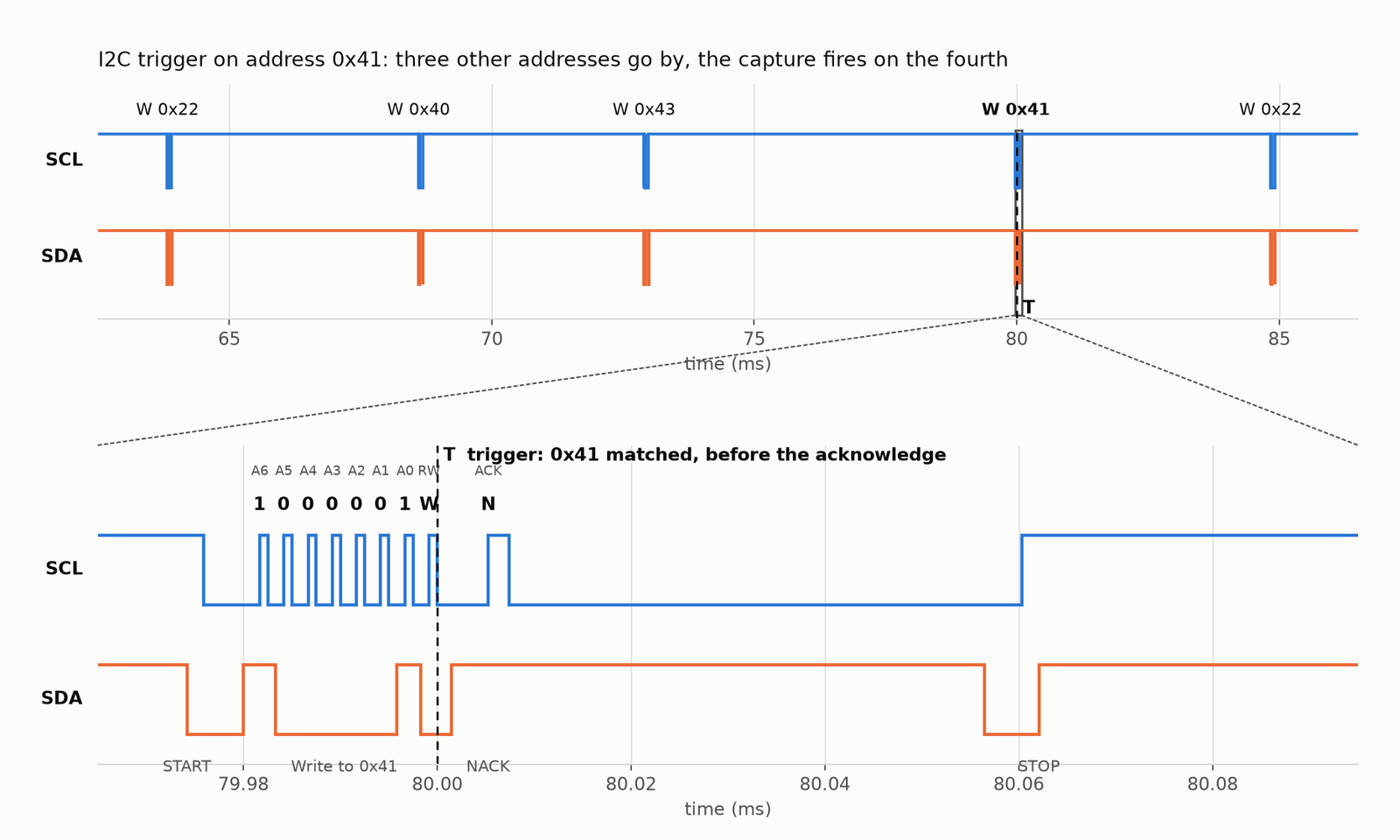
An SP259 capture triggered on I2C address 0x41, with three other addresses before it and a zoom on the matching frame

We are often asked about protocol triggers: starting a capture on an I虏C address, or on one particular byte going by on a UART line. It is a powerful feature, and also one that can feel a little complex to use, especially from the SDK.

So here is the whole picture: how to set one up from your own code in a few lines, what happens underneath, and what it looks like on a real bench.

The ScanaStudio SDK: Everything the Window Does, From Python, NodeJS, Rust or C

路 8 min read
Ibrahim Kamal
Ibrahim Kamal
CEO @ Ikalogic

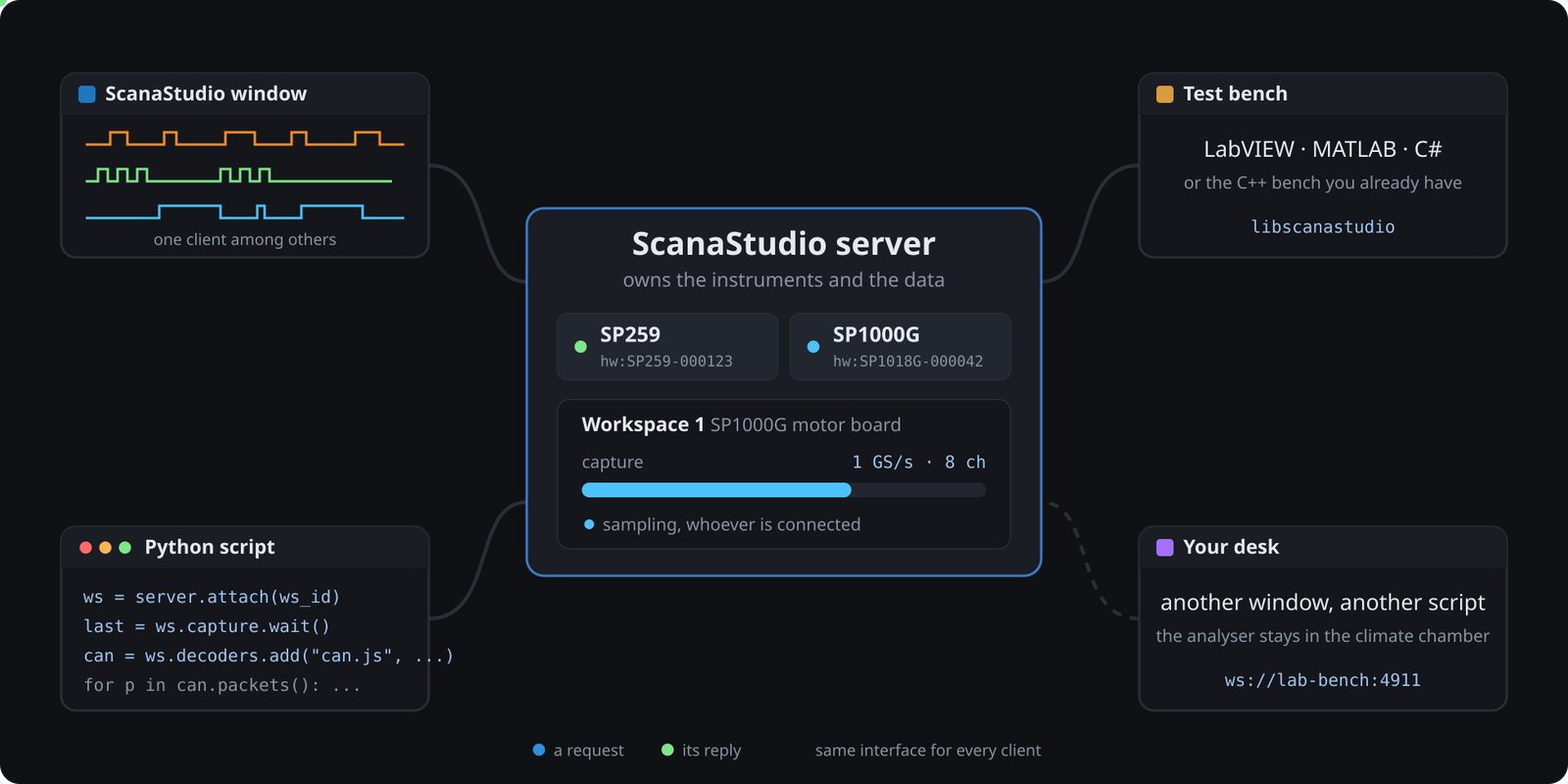
The ScanaStudio server in the middle, with a window, a Python script, a test bench and a remote laptop all talking to it

There is an email we get about once a month. The wording changes, the question does not: "Can I run this from a script?"

For years the honest answer was "sort of." We had the IHWAPI, one C library per device family, and it could open a device and hand you raw transitions. The decoding, the triggers, the measurements, everything that makes ScanaStudio useful, you had to rebuild yourself. A few brave people did. Most people, quite reasonably, did not.

With V6 the answer is yes. In Python, NodeJS, Rust or C. With every feature the window has, not a reduced automation subset.

ScanaStudio V6: We Rebuilt It From the Ground Up. Here Is What Changes for You

路 6 min read
Ibrahim Kamal
Ibrahim Kamal
CEO @ Ikalogic

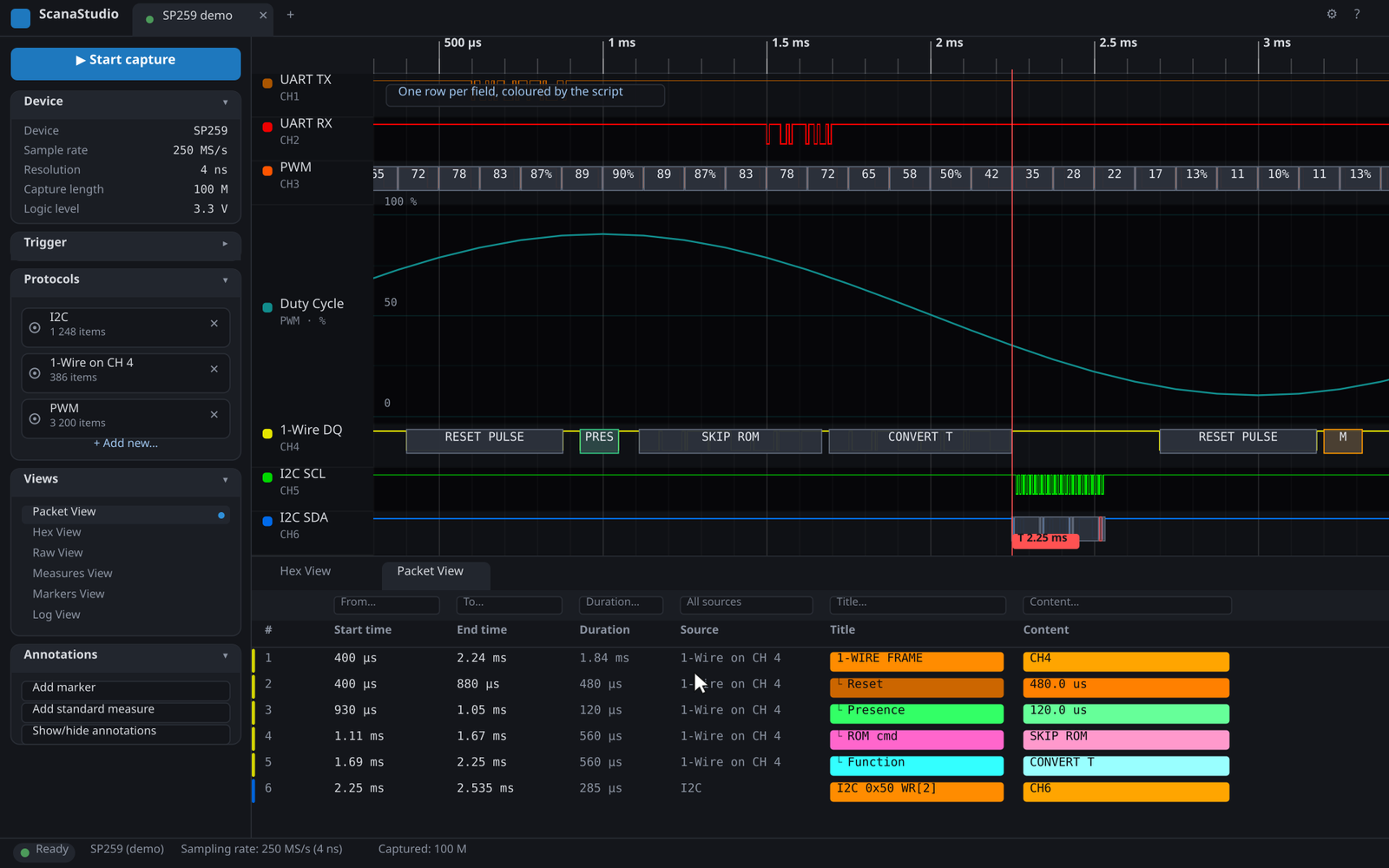
ScanaStudio V6 decoding I2C, 1-Wire and PWM on an SP259, with the Packet view open

Every version of ScanaStudio until now was one program. It owned the USB cable, it owned the samples, and it owned the window. Close the window, and the capture went with it. Want to look at the analyser sitting on the bench in the next room? Walk.

That worked for a long time. It also quietly blocked most of the things people kept asking us for.

So we did the thing engineers are told never to do. We started over.

ScanaStudio V6 is a new server written in Rust, a new interface, and one download for Windows, Linux and macOS. This post is about what that changes for you, not about how we built it.

How We Used AT1032S to Hunt Down a HardFault in a Factory Network

路 6 min read
Ibrahim Kamal
Ibrahim Kamal
CEO @ Ikalogic

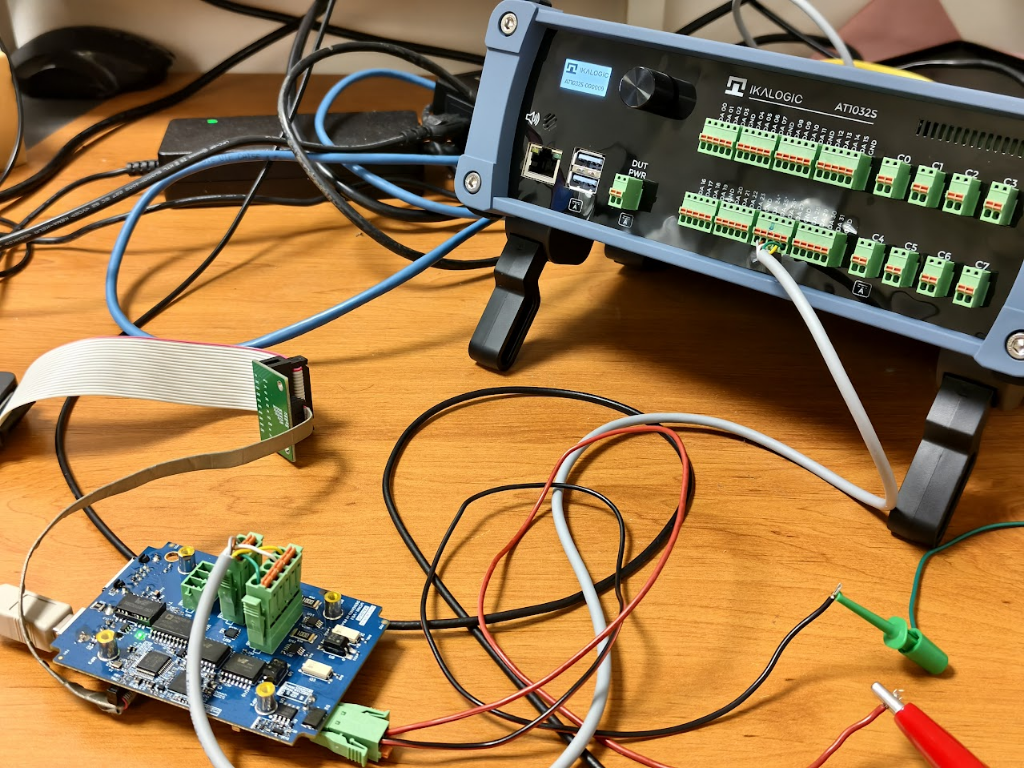
AT1032S reproducing a real CANopen and Modbus setup in the lab

We were working on a CANopen-to-Modbus converter for a factory project when the firmware decided to develop a personality.

Every now and then, the converter would crash with a HardFault. Not every hour. Not every test cycle. Not even every shift. More like once every one or two days, just often enough to be a serious problem and just rarely enough to be deeply annoying.

And of course, the bug only showed up in the real installation.

In a factory, that is a terrible place to play "let's try stuff and see what happens." The environment is mission-critical, the system has to keep doing its job, and nobody is excited about an engineer showing up with a cable and a chaotic debugging plan.

So we needed a different approach: bring the factory home.