USB device power-cycle reliability test
Both USB ports on the AT1032S have switched power and their own current measurement. A firmware reliability run that would otherwise need a relay board and an inline USB meter becomes a loop: cut the port, restore it, and confirm the device came back and is drawing what it should. Leave it running overnight and it will find the unit that stops re-enumerating after four hundred cycles.
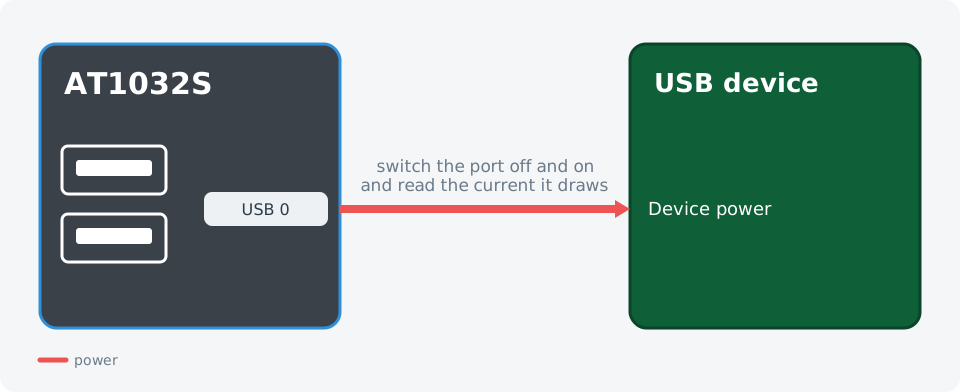
Switch, wait, measure, log. One row per cycle, so a failure at 03:00 is on the record.
Wiring
| AT1032S | Device under test |
|---|---|
USB 0 | The USB device, plugged straight into the port |
The test sequence
- NodeJS
- Python
import { AT1000 } from '@ikalogic/at1000';
import { appendFileSync, writeFileSync } from 'node:fs';

// ---- The run --------------------------------------------------------------
const USB_PORT = 0;
const CYCLES = 500;
const OFF_MS = 1000;             // how long the device stays unpowered
const BOOT_MS = 3000;            // time the device needs to come back and settle
const CURRENT_MIN_A = 0.020;     // below this, the device did not start
const CURRENT_MAX_A = 0.450;     // above this, it came up wrong
const STOP_AFTER_FAILURES = 5;   // consecutive failures that end the run
const CSV_PATH = 'usb-power-cycle.csv';
// ---------------------------------------------------------------------------

const sleep = (ms) => new Promise((resolve) => setTimeout(resolve, ms));

const devices = await AT1000.findDevices();
const tester = await AT1000.open(devices[0]);
await tester.reset();

const port = tester.power.usb(USB_PORT);

writeFileSync(CSV_PATH, 'cycle,timestamp,voltage_v,current_a,verdict\n');

let failures = 0;
let consecutive = 0;

for (let cycle = 1; cycle <= CYCLES; cycle++) {
  await port.disable();
  await sleep(OFF_MS);
  await port.enable();
  await sleep(BOOT_MS);

  const volts = await port.read_voltage();
  const amps = await port.read_current();

  let verdict;
  if (amps < CURRENT_MIN_A) {
    verdict = 'did-not-start';
  } else if (amps > CURRENT_MAX_A) {
    verdict = 'overcurrent';
  } else {
    verdict = 'ok';
  }

  if (verdict === 'ok') {
    consecutive = 0;
  } else {
    failures++;
    consecutive++;
  }

  const timestamp = new Date().toISOString();
  appendFileSync(CSV_PATH,
    `${cycle},${timestamp},${volts.toFixed(3)},${amps.toFixed(3)},${verdict}\n`);

  if (verdict !== 'ok' || cycle % 25 === 0) {
    console.log(`cycle ${cycle}: ${volts.toFixed(2)} V, ` +
                `${(amps * 1000).toFixed(0)} mA, ${verdict}`);
  }

  if (consecutive >= STOP_AFTER_FAILURES) {
    console.log(`\nStopping: ${consecutive} failures in a row at cycle ${cycle}.`);
    break;
  }
}

await port.enable();      // leave the device powered

console.log(`\n${failures} failing cycles. Log written to ${CSV_PATH}`);
from ikalogic_at1000 import AT1000
from datetime import datetime, timezone
import csv
import time

# ---- The run -------------------------------------------------------------------
USB_PORT = 0
CYCLES = 500
OFF_S = 1.0                # how long the device stays unpowered
BOOT_S = 3.0               # time the device needs to come back and settle
CURRENT_MIN_A = 0.020      # below this, the device did not start
CURRENT_MAX_A = 0.450      # above this, it came up wrong
STOP_AFTER_FAILURES = 5    # consecutive failures that end the run
CSV_PATH = "usb-power-cycle.csv"
# ---------------------------------------------------------------------------------

devices = AT1000.find_devices()
tester = AT1000.open(devices[0])
tester.reset()

port = tester.power.usb(USB_PORT)

failures = 0
consecutive = 0

with open(CSV_PATH, "w", newline="") as handle:
    writer = csv.writer(handle)
    writer.writerow(["cycle", "timestamp", "voltage_v", "current_a", "verdict"])

    for cycle in range(1, CYCLES + 1):
        port.disable()
        time.sleep(OFF_S)
        port.enable()
        time.sleep(BOOT_S)

        volts = port.read_voltage()
        amps = port.read_current()

        if amps < CURRENT_MIN_A:
            verdict = "did-not-start"
        elif amps > CURRENT_MAX_A:
            verdict = "overcurrent"
        else:
            verdict = "ok"

        if verdict == "ok":
            consecutive = 0
        else:
            failures += 1
            consecutive += 1

        timestamp = datetime.now(timezone.utc).isoformat()
        writer.writerow([cycle, timestamp, f"{volts:.3f}", f"{amps:.3f}", verdict])
        handle.flush()

        if verdict != "ok" or cycle % 25 == 0:
            print(f"cycle {cycle}: {volts:.2f} V, {amps * 1000:.0f} mA, {verdict}")

        if consecutive >= STOP_AFTER_FAILURES:
            print(f"\nStopping: {consecutive} failures in a row at cycle {cycle}.")
            break

port.enable()      # leave the device powered

print(f"\n{failures} failing cycles. Log written to {CSV_PATH}")

tester.close()
Adapting it to your device
CURRENT_MIN_AandCURRENT_MAX_Aare the window a healthy device sits in once it has come up. Run a handful of cycles first and read the log to pick them.BOOT_MSmust cover enumeration and whatever your device does at startup.STOP_AFTER_FAILURESkeeps an overnight run from spending hours on a device that has already died.- The second USB port works the same way, so two devices can be cycled in one run.